At work or while traveling, the grinder is often the awkward part of the coffee setup: bulky, messy, or tied to the nearest outlet. A compact cordless grinder helps only when its adjustment range and capacity match the way you brew.
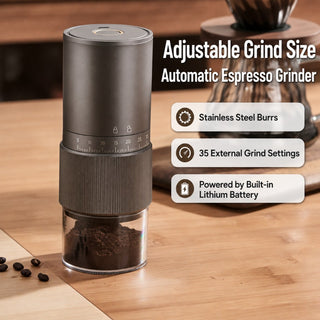
The Yozcoffee USB-C rechargeable coffee grinder is built around that small-batch routine. It has a ceramic conical burr, 38 external settings, a 25g bean hopper, a detachable 50g grounds bin, and one-button operation with automatic stop. This guide explains how to use those features without treating the numbered dial as a magic recipe.
What this rechargeable grinder is designed to do
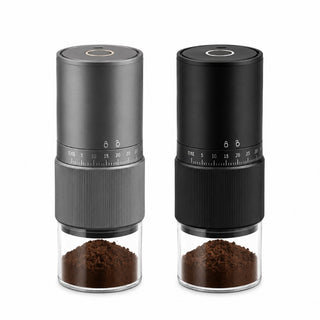
At 7cm wide and 19.5cm tall, the grinder takes up about as much counter width as a narrow travel mug. Its listed net weight is 430g, so it is portable enough for an office shelf, RV cupboard, or carefully packed travel coffee kit, though it is not pocket-sized.
The 25g hopper points to single-batch use. A 15–18g pour-over dose fits, but the hopper—not the 50g grounds bin—is the limiting capacity. If your recipe uses more than 25g, plan to grind in two rounds.
The grinder runs on a listed 2000mAh rechargeable battery and uses a USB-C charging connection. A charging cable is included. The product page does not state a fixed number of grinding cycles per charge, and that number can vary with bean density, roast level, grind setting, and dose. Charge before a trip instead of relying on an assumed batch count.
The key specifications at a glance
| Feature | Product specification | What it means in practice |
|---|---|---|
| Burr | Ceramic conical burr | Grinds through a burr mechanism rather than chopping beans with blades |
| Adjustment | 38 external steps | The setting can be changed from outside the grinder |
| Bean hopper | 25g | Suited to one moderate brew dose or two smaller servings |
| Grounds bin | 50g, transparent, detachable | Lets you see and transfer the grounds without opening the motor body |
| Battery | 2000mAh lithium, USB-C rechargeable | Cordless operation with an included charging cable |
| Power | 30W | Listed motor power; it is not a measure of grind accuracy |
| Size | 7 × 19.5cm | Narrow footprint for compact counters and travel storage |
| Net weight | 430g | Portable, but more substantial than a manual travel grinder |
| Colors | Milk Tea or Black | Two body finishes with the same listed grinding features |
How to use the 38 grind settings
The external ring lets you see the setting before adding beans and make a one-step change without taking apart the hopper. The product's guide divides the dial into these starting ranges:
| Dial range | Suggested brew method |
|---|---|
| 1–6 | Espresso-fine range |
| 6–12 | Moka pot |
| 12–18 | Pour-over |
| 18–28 | Drip coffee |
| 28–38 | French press or cold brew |
Treat those bands as starting points, not universal answers. The same number can behave differently with a dense light roast and a more brittle dark roast. Espresso machines, filter baskets, drippers, paper filters, and batch sizes also change the resistance the water meets.
For a first pour-over, setting 15 is a sensible place to begin because it sits near the middle of the product's suggested pour-over range. Brew one cup with a repeatable dose and water amount, then use the result to choose the next step.
- If the brew drains very quickly and tastes thin or sharply sour, move a little finer.
- If it drains unusually slowly and tastes harsh, dry, or overly bitter, move a little coarser.
- Change one or two steps at a time. Large jumps make it harder to learn what improved the cup.
Keep the coffee dose, water amount, water temperature, and pouring pattern steady while adjusting the grinder. Otherwise, several variables move at once and the dial receives the blame for a change it did not cause.
Can a portable electric grinder work for espresso?
The product page assigns settings 1–6 to espresso-fine grinding, so the grinder is intended to reach that end of the range. Whether a setting works with a particular espresso machine still depends on the basket, beans, dose, and pressure system.
This distinction matters most with non-pressurized baskets, where small grind changes can noticeably affect shot time. Start within the listed range, make single-step adjustments, and watch the actual extraction. Do not assume that “setting 3” is a transferable recipe from another grinder—or even from a different bag of beans.
For a pressurized basket or an espresso-style brewer that tolerates a wider grind window, dialing in may be less demanding. For repeated traditional espresso shots, a larger dedicated espresso grinder may offer a faster workflow and more room for consecutive doses. This portable model makes more sense when compact storage, cordless use, and multiple brew methods matter most.
A practical office or travel workflow
Portability improves coffee only when the routine stays simple. A compact setup can be reduced to a grinder, brewer, filters, cup or server, small scale, beans, and a way to heat water.
- Weigh the beans before loading. This avoids filling the hopper by eye and makes the next cup repeatable.
- Check the adjustment ring. It is easy to bump a visible external dial while packing or cleaning.
- Lock the parts into place. Align the body and grounds bin according to the lock marks before pressing the button.
- Press once and let the grinder stop automatically. There is no need to hold the button through the cycle.
- Transfer the grounds promptly. The clear 50g bin makes it easy to confirm that the dose has finished and to pour it into the brewer.
- Brush away loose grounds after the cup. A quick dry cleanup is easier than dealing with compacted residue later.
Charging and care without damaging the motor body
The rechargeable format removes a power cord from the brewing counter, but it does not make the whole grinder washable. The product description specifically calls the transparent grounds bin detachable and rinseable; it does not describe the motor body as waterproof.

Use the included brush for loose coffee around the outlet and adjustment area. Rinse only removable parts that the product instructions identify as washable, and let them dry fully before reassembly. Keep the powered body and USB-C port away from running water. If the included manual gives more specific cleaning directions, follow those instructions first.
Charge on a dry, stable surface. A USB-C connector describes the plug format, not every charger's electrical behavior, so use a compatible power source and the supplied cable. The product page says charging can be done from a wall adapter, laptop, or power bank, which is useful when the grinder moves between home and work.
Who this grinder fits—and who may want something larger
This grinder is a practical fit for someone who usually makes one cup at a time and wants fresh grounds without dedicating permanent counter space to a full-size appliance. The 38-step range also suits a household that moves between pour-over, moka pot, drip, French press, and cold brew.
It is especially relevant for:
- an office pour-over setup without a convenient outlet;
- a small apartment coffee shelf;
- RV or hotel brewing where luggage space matters;
- a brewer who wants powered grinding without carrying loose batteries;
- a household that changes brew methods and wants an external adjustment dial.
It may be less suitable if you regularly grind more than 25g at once, prepare several drinks back to back, or need the continuous fine control of a specialist espresso grinder. A cordless design is convenient, but it also adds one maintenance task: remembering to charge the battery.
The useful question is whether it removes friction from your actual routine. For one cup beside a laptop or a compact travel brewer, portability can matter more than throughput; a busy espresso station reverses those priorities.
A simple starting recipe for pour-over
Use this as a repeatable test rather than a claim that one recipe fits every coffee:
- 16g coffee
- 250g water
- setting 15 as the initial grinder position
- your usual dripper and filter
- the same pouring method for each test
Taste the cup and note the total drawdown time. If it is thin and fast, try setting 14. If it is slow and drying, try 16. Repeat with the same beans before making another change. Within a few brews, you will have a useful reference point for that bag.
Once you know the setting, write it on the coffee bag or save it in a brew note. The value of 38 settings is not the number itself; it is the ability to return to a result and adjust in small, visible steps.
Final take
A good cordless grinder should make the routine shorter, not turn the dial into another puzzle. The Yozcoffee model combines a 25g small-batch hopper, external 38-step adjustment, ceramic conical burr, automatic stop, and USB-C charging in a narrow body. Those features are best used with a measured dose and one-variable-at-a-time dialing in.
If that matches the way you brew, review the specifications and both color options on the Yozcoffee USB-C rechargeable electric coffee grinder product page. If you routinely prepare larger batches or demanding back-to-back espresso shots, compare capacity and workflow before choosing portability.
Frequently asked questions
How much coffee can the grinder hold?
The bean hopper is listed at 25g. The transparent grounds bin is listed at 50g, but the smaller hopper determines how much can be ground in one loading.
What setting should I use for pour-over?
The product guide suggests settings 12–18 for pour-over. Start around 15, then move finer or coarser based on drawdown and taste while keeping the rest of the recipe consistent.
Does the grinder stop automatically?
Yes. The product page describes one-button operation with automatic stop when grinding is finished.
Is a wall charger included?
The included-items list names a USB-C charging cable, but it does not list a wall adapter. Use a compatible power source.
Can I rinse the whole grinder?
The product page says the detachable transparent grounds bin can be rinsed. It does not claim that the powered body is waterproof, so keep the motor housing and charging port dry.
Does it work for French press and cold brew?
The listed starting range for French press and cold brew is 28–38. Adjust within that range to suit the filter, steep time, beans, and preferred cup texture.